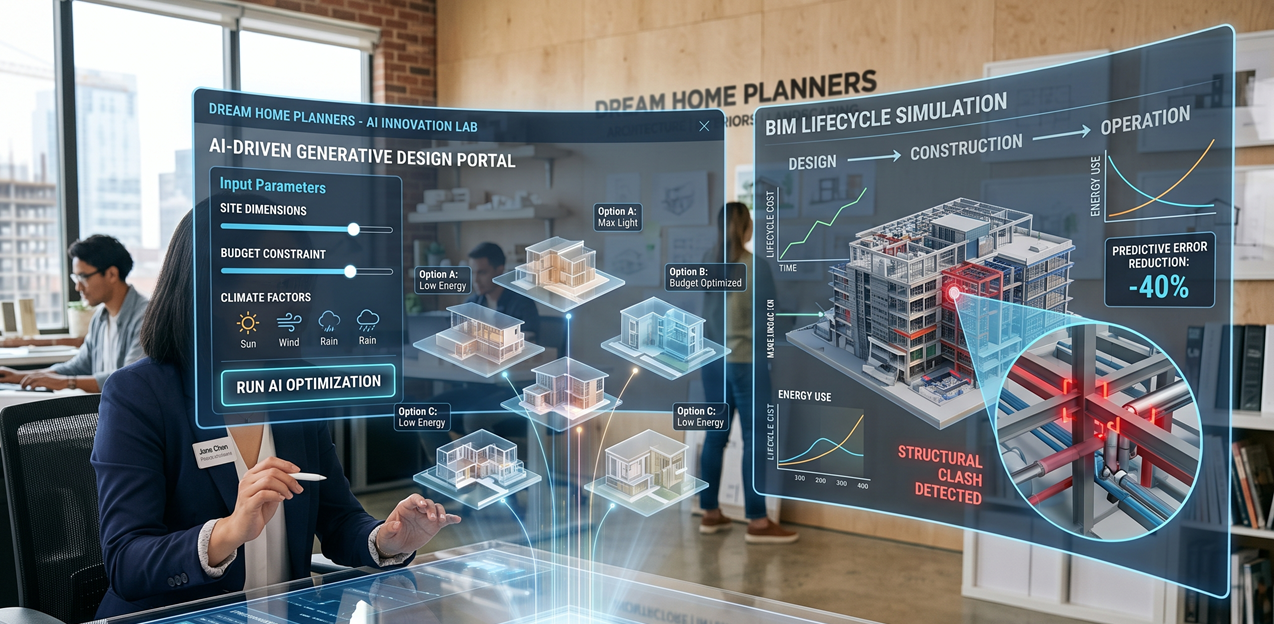
Artificial Intelligence has moved past simple task automation into active problem-solving. Generative design tools now allow architects to input rigid parameters—such as site dimensions, budget constraints, and climate factors—to instantly generate multiple optimized layout options.
Furthermore, integrating AI with Building Information Modeling (BIM) allows teams to simulate the entire project lifecycle. This predictive capability catches structural clashes early, which can reduce design errors by up to 40% before a single brick is laid.